

Practical strategies for managing stress — and why magnesium might be the missing piece in your wellness routine
STRESS AWARENESS MONTH • APRIL 2026 • WELLNESS & NUTRITION

April is Stress Awareness Month — and if you’ve been feeling stretched thin lately, you’re far from alone. Since 1992, this month has shone a light on the very real impact that stress has on our physical and mental health, and why taking steps to manage it matters so much.
Whether it’s work deadlines, family responsibilities, financial pressures, or simply the pace of modern life, stress is something most of us navigate daily. The good news? There are simple, evidence-backed ways to ease that burden — and some of them might surprise you.
“Stress is not something to push through. It’s a signal from your body that deserves your attention — and your compassion.”
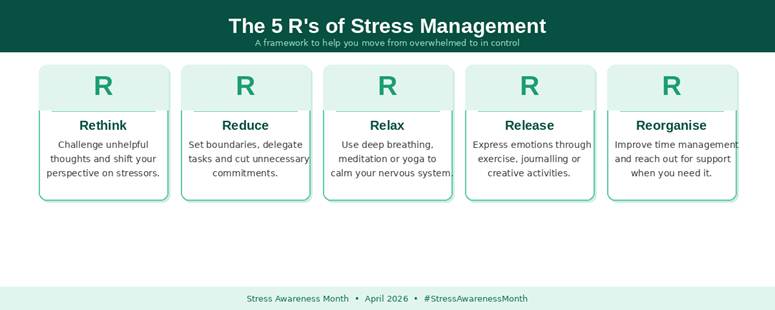
The 5 R’s of Stress Management
One of the most effective frameworks for tackling stress is the 5 R’s — a set of strategies that move you from feeling overwhelmed to feeling genuinely in control.
Try the 3-3-3 Rule When Stress Peaks
If you ever feel anxiety or stress rising in the moment, the 3-3-3 rule is a beautifully simple grounding technique to bring you back to the present:
- Name 3 things you can see around you
- Identify 3 sounds you can hear right now
- Move 3 parts of your body — wiggle your toes, roll your shoulders, stretch your fingers
This works because it interrupts the cycle of anxious thoughts by anchoring your attention to your senses — grounding you in the here and now, rather than the spiralling “what ifs” in your head.

The Magnesium Connection: Your Body’s Natural Stress Mineral
While lifestyle strategies are vital, there’s a nutritional angle to stress that often goes overlooked: magnesium deficiency. Magnesium plays a critical role in how your body responds to stress — it helps regulate cortisol (your primary stress hormone), supports healthy nerve function, relaxes muscles, and promotes restful sleep.
Here’s the catch: stress itself depletes magnesium from the body. So the more stressed you feel, the more magnesium you lose — creating a vicious cycle that leaves you feeling even more tense, fatigued, and on edge. Studies suggest that a significant portion of the population may not be getting enough magnesium through diet alone.
Signs that your magnesium levels might be low include:
- Muscle cramps or tension
- Difficulty sleeping or staying asleep
- Feeling anxious or irritable
- Fatigue and low energy
- Headaches or migraines
Topping up your magnesium through a high-quality supplement can make a real difference — supporting your nervous system, easing tension, and helping you feel more resilient in the face of daily stress.
Support your body from the inside out
Our Ultra Magnesium Complex is formulated to deliver multiple forms of magnesium for maximum absorption — helping your body manage stress, improve sleep, and support muscle relaxation naturally.

Small Daily Habits That Make a Big Difference
Alongside supplementation, these everyday habits can help keep stress in check:
- Spend time outdoors — even a 10-minute walk can lower cortisol levels
- Keep a journal to process thoughts and emotions
- Prioritise sleep — your body (and mind) repairs itself overnight
- Connect with others — talking to someone you trust is powerful medicine
- Limit caffeine and alcohol, both of which amplify stress responses
- Practice deep breathing for just a few minutes each day

This April, Let’s Take Stress Seriously
Stress Awareness Month isn’t just about acknowledging that stress exists — it’s an invitation to actually do something about it. Whether you start with the 5 R’s, try the 3-3-3 rule next time anxiety spikes, or look into how magnesium can support your body’s stress response, every small step counts.
You don’t have to feel this way. There are tools, strategies, and support available — and it all starts with deciding that your wellbeing is worth investing in.
If you found this helpful, share it with someone who might need it this April. And remember — managing stress isn’t a luxury. It’s essential care for the life you want to live.
 Calm Mind Healthy Body